Framework
Our strategic pillars, starting capital prototypes, and network partners

Analysis
Access our own analysis and policy proposals for discussion.

Background
A collection of media and research articles on inheritance and related topics.

Status and Inheritance: Hanno Sauer’s “Class” analysis.
In the book “Class. The origin of top and bottom.” the author Hanno Sauer makes the claim that that economic redistribution—no matter the form: whether a basic inheritance, UBI, progressive
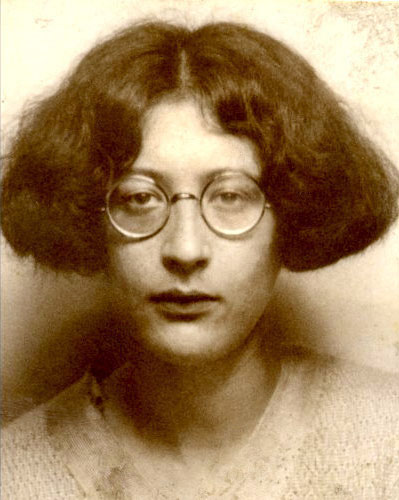
Simone Weil’s (1943) “right to property” against uprootedness
Simone Weil (1909–1943), was a philosopher who died working for the French resistance movement against Nazi-Germany. She is noted for her intense patriotism, Jewish heritage, and Christian spirituality, possessing a
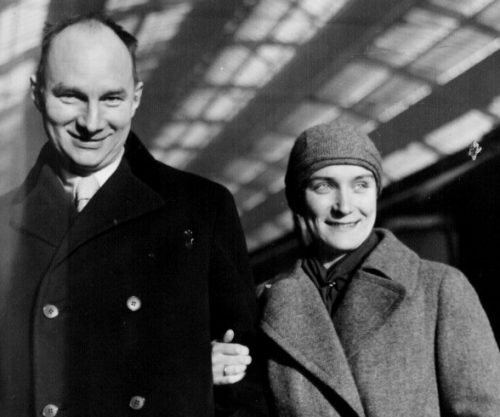
Ordo-liberalism, starting justice and a universal basic inheritance: Alexander Rüstow
Alexander Rüstow, a towering figure in the German Ordoliberal school of thought, developed his ideas while navigating a tumultuous political period. As an opponent of the Nazi regime, he fled

Matthias Erzberger’s ambitious inheritance reform of 1919
Matthias Erzberger, a pivotal figure in early 20th-century German politics, stands out among proponents of inheritance reform due to his background as an active politician rather than an academic, and

The ‘Abolition of inheritance’: Theodor Oelenheinz
In the times of socialist revolutions in post-war Germany, the lawyer Theodor Oelenheinz, son of a bank director from Karlsruhe, grandson of the former finance minister of Baden (Germany) Karl

Disability and Opportunity: Can Inheritance Bridge the Gap?
One of the underlying assumptions in this text has been that financial privilege correlates with other privileges (see for instance our article on Biological Feudalism). The idea, put simply, is that

Reforming inheritance tax systems: Four guiding principles
Inheritance tax systems can play an important role in increasing social equality, yet across the world, these systems often struggle to achieve their intended aims. Étienne Fize, Nicolas Grimprel and

Earned vs. unearned: the German and Austrian discourse on inheritance tax
The authors of this study have evaluated 3573 arguments within the German and Austrian public discourse on inheritance tax. First clear result: he public opinion goes against inheritance taxes. This doesn’t

Why is it so difficult to tax the rich?
There is a paradox: A great majority of people would benefit from increasing taxes on the rich (and this is particularly true for inheritance taxes), but progressive tax reforms appear

Expropriation? Why 100 percent inheritance tax would be better
The article explores possible justifications for 100 percent inheritance tax. It’s based on the belief that equality of opportunity is not only a social but also a deeply liberal idea.

A hated tax, but a fair one
NO TAX is popular. But one attracts particular venom. Inheritance tax is routinely seen as the least fair by Britons and Americans. This hostility spans income brackets. Indeed, surveys suggest
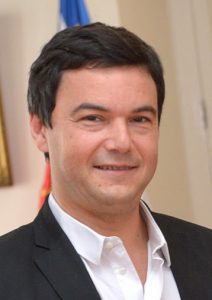
Optimal inheritance tax rate
Scholars estimate the optimal inheritance tax rate to be around 50%–60% or larger. In a 2012 article, Thomas Piketty and Emmanuel Saez find that the optimal inheritance tax rate might